Video Production Marketing: How Studios Turn Their Footage Into Booked Projects
Video production marketing is the work of promoting a production studio so the right clients find its reel, request a quote, and sign. A studio sells to marketing departments, ad agencies, couples, realtors, and event planners, and each buyer shops differently. Steady growth comes from building promotion around those differences, not from one generic marketing campaign.
Video production marketing combines professional content with strategic promotion to attract leads, build trust, and grow revenue by aligning footage with each stage of the buyer journey.
By defining objectives, choosing formats, and smartly distributing across YouTube, LinkedIn, and social channels, businesses can boost engagement, conversions, and ROI with high-quality video that resonates.
The demand is there. According to recent video marketing statistics, 91% of businesses now use video as a marketing tool. The hard part for a studio isn’t proving that footage works. It’s getting picked from a shortlist of five studios that all deliver high-quality video.
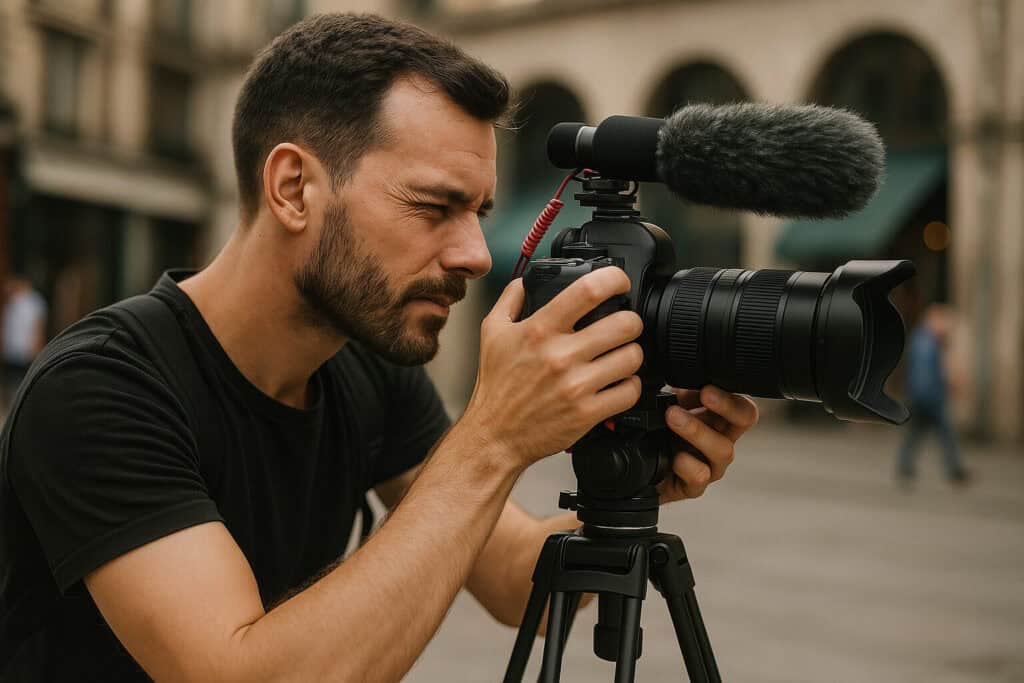
What Is Video Production Marketing for a Studio?
The phrase has two meanings, and mixing them up wastes budget. One is the service a studio sells: planning, shooting, and editing video content that a client uses in its own video marketing strategy. The other is the promotion of the studio itself. This page covers the second one, the pipeline that brings a production team its next corporate retainer, commercial spot, or wedding booking.
Three traits make this business harder to promote than most local services:
- Project-based revenue. Few clients buy every month, so each lead carries a high value and repeat work matters more than volume.
- Quote-based pricing. No fixed price list exists, so the website has to pre-qualify budgets without scaring buyers off.
- Proof over promises. The portfolio does the selling. Copy only gets a prospect to press play.
Who Buys Video Production? Five Niches With Five Different Buyers
A corporate communications manager and a bride are both clients, but they shop in completely different ways:
| Niche | Typical buyer | How they find a studio | Sales cycle |
|---|---|---|---|
| Corporate | Marketing or HR manager | Google search, LinkedIn, referrals, RFPs | Weeks to months, often with procurement |
| Commercial and ads | Ad agency producer or brand manager | Agency rosters, reels, word of mouth | Bid-driven, short once awarded |
| Event | Event planner or association | Venue and planner referrals, search | Tied to the event calendar |
| Real estate | Listing agent or brokerage | Local search, Instagram, agent referrals | Days, repeat per listing |
| Wedding | Couple | Instagram, wedding directories, planner referrals | Months ahead of the date |
A studio serving more than two niches needs a service page, a reel, and an ad group for each. A realtor who lands on brand films leaves, and so does a CMO who lands on wedding highlights.
Why the Showreel and Portfolio Do the Selling
A showreel is a short edit of a studio’s best shots, built to prove craft in under two minutes. For most studios it is the single page element most likely to turn a visitor into an inquiry, which makes it a sales asset first and a creative piece second.
The common mistake is one cinematic reel with no context. Buyers want work that looks like their project:
- One reel per niche, 60 to 90 seconds, opening with the strongest shot in the first five seconds.
- Case pages, not just embeds. Each featured project gets the brief, the deliverables (explainer video, testimonial, brand video, social cutdowns), the timeline, and the result the client saw.
- Client logos and a named testimonial beside the reel, where trust is decided.
- A quote button under every reel, because that is the moment intent peaks.
Case pages also give search engines text to index. A reel alone has none; a case page with a written brief can rank for long-tail searches like “corporate training film for a manufacturer.”
YouTube and Video SEO for a Studio’s Own Work
Video SEO is the practice of making footage and the pages around it discoverable in Google search, YouTube, and AI answers. Studios are often oddly weak here: they deliver polished assets to clients but publish their own work with filenames like “final_v7” and no description.
Treat YouTube, the largest online video platform, as a searchable portfolio. Title each upload by what a buyer would type (“Manufacturing Safety Training Film, 3 Minute Cut”), write a description that names the client type and the location, and group uploads into playlists by niche. Then embed the same piece on the matching case page. Google’s video SEO best practices favor a dedicated watch page where the clip is the main content, which is exactly what a case page is.
To maximize the SEO benefits, apply these on the studio’s own site:
- Add descriptive titles and transcripts to every piece of footage
- Use VideoObject schema markup so search engines understand the content
- Host on YouTube for discoverability, then embed on your own pages for dwell time
- Optimize thumbnails with compelling visuals and relevant file names
- Include closed captions for accessibility and indexing
For real estate, event, and wedding work, a Google Business Profile with the “videographer” category, project photos, and reviews that name the shoot (“our product launch film”) beats a profile with stars and no detail.
Quote-Based Pricing and Long Sales Cycles
Publishing price ranges filters out mismatched leads and builds trust. “How much does video production cost?” is one of the most searched questions in this space, and an honest answer often wins the call.
A simple testimonial piece might run $500 to $2,000, while a full corporate brand story can range from $5,000 to $50,000 or more. A pricing page that says so, and names what drives the number (the type of video, crew size, shoot days, locations, animation, licensed music), keeps a $1,500 budget from booking a discovery call meant for a $20,000 project.
Corporate deals move slowly. The person who fills out the form rarely signs, so the proposal has to survive being forwarded. Include the pre-production plan (script, storyboard, shot list), the shoot schedule, the post-production steps, and the revision rounds in plain language. A proposal that a finance director can read in two minutes closes faster than one written for another filmmaker.
Follow-up is where most studios lose deals. A CRM (customer relationship management tool) that logs every quote keeps a 90-day corporate decision from going cold in week six.
How to Find Clients for Video Production Beyond Search
The biggest jobs often skip search entirely and arrive through three pipelines a studio can build on purpose.
Agency subcontracting. Advertising and digital marketing agencies often sell video marketing to clients launching a new product or service, then hire outside crews to shoot it. Getting on two or three agency rosters can fill a calendar. The pitch is reliability: on-time delivery, white-label work, and no poaching.
RFPs. Government bodies, universities, hospitals, and large companies post requests for proposals. Pick the ones that match the studio’s reel and budget band; a “past performance” page with similar projects speeds every response.
Referral partners. Wedding planners, venues, brokerages, and event companies see a studio’s work up close. A partner page, a co-branded highlight cut to share on social media platforms, and a thank-you for every referral keep work flowing.
When pitching these partners, the numbers buyers have already read help frame the value of a marketing video:
- People process moving images 60,000 times faster than text
- Landing pages with embedded clips see up to 80% higher conversion rates
- Social media platforms reward footage with 48% more views than static images
- Consumers are 64% more likely to purchase after watching a product video
- Email campaigns that include visual content boost click-through rates by 300%
Use them sparingly. A procurement team trusts one relevant result from a similar client more than five industry averages.
Paid Search and Video Ads for Production Studios
Google Ads works for studios when the campaign targets buyers, not filmmakers. Searches like “corporate video production services” or “real estate videographer near me” carry hiring intent. Searches with “jobs,” “course,” “free,” “template,” or “editor salary” do not, and they eat budget fast in this industry. A starting list like the universal negative keyword list blocks much of that waste on day one.
For corporate work, Microsoft Ads often costs less per click than Google, and LinkedIn targets by job title. A YouTube video ad doubles as proof of skill: a 15-second cut of the best work, shown to pricing-page visitors, retargets and demonstrates craft at once.
Seasonality by Niche and How to Evaluate Video Performance
Each niche peaks at a different time, so budgets should shift through the year:
- Wedding: inquiries cluster after the holiday engagement season, roughly December through March, for shoots in late spring through fall.
- Corporate: Q4 brings year-end budget spending; Q1 brings new-year planning and kickoff content.
- Real estate: listing volume and shoot requests climb in spring and early summer.
- Event: conference seasons in spring and fall, with bookings made months earlier.
Measure the money, not just the views. Key metrics, in order of importance:
- Conversion rate: How many visitors became quote requests
- Quote-to-close rate: How many quotes became signed projects, by niche
- Watch time: How long prospects stayed on the reel
- Click-through rate: How often viewers took the next step
- View count and bounce rate: Whether the embedded footage kept people on the page
If watch time on the reel drops at the 15-second mark, the hook needs work. If click-throughs are low, test a different call to action. If quote-to-close is weak in one niche only, the problem is usually pricing fit or the proposal, not the ads.
How BuyerGain Supports Video Production Companies
BuyerGain helps creators and studios grow with digital promotion built for the visual content industry, from SEO audits to paid advertising management. The agency works with filmmakers and studios across the U.S. so their best work brings in bookings, not just portfolio views. See the full list of BuyerGain services and other industries served.
Advertising for Creators
Search and social ad campaigns aimed at high-intent buyers, with negative keyword lists that keep job seekers and students out of the budget. The focus is conversions, not impressions.
CRM and Lead Management
Lead tracking, follow-up sequences, and proposal management, so long corporate cycles stay organized from quote to contract.
Lead Generation
Full funnels that attract, educate, and convert ideal clients, blending content strategy, targeted ads, and search optimization into a steady pipeline of qualified inquiries.
Search Engine Optimization
Niche service pages, case pages, and correctly embedded clips that rank for the terms buyers actually search, while keeping the site fast.
WordPress Website Design
Conversion-focused WordPress sites with fast load times, quote forms, and layouts built to showcase multiple reels and past projects. BuyerGain works with small to mid-sized companies, solo creators, and boutique studios that want more from their online presence.
Start your video production marketing by picking the one niche that pays best, cutting a reel and a case page for it, and publishing a pricing range. Then point search ads and referral outreach at that page before the niche’s busy season. If you want help building that pipeline, reach out to our team for a custom strategy.
Frequently Asked Questions About Video Production Marketing
What is video production marketing?
Video production marketing is the promotion of a production studio so it attracts qualified clients and booked projects. It covers the studio’s website, reels and case pages, search and paid ads, referral partnerships, and follow-up on quotes.
How do I market my video production company?
Market a studio niche by niche. Build a reel and a service page for each type of client, publish case pages for your best projects, optimize your YouTube channel and Google Business Profile, and run search ads only on hiring-intent keywords.
How do video studios find new clients?
Most studios find clients through a mix of search, referrals, agency subcontracting, and RFPs. Search brings in local and smaller projects, while agency rosters and RFP responses tend to bring the larger corporate budgets.
How much does video production cost?
Costs vary widely depending on scope. A simple testimonial might run $500 to $2,000, while a full corporate brand story can range from $5,000 to $50,000 or more. Crew size, shoot days, locations, animation, and music licensing drive most of the difference.
Which platforms work best for promoting a studio?
Your own website converts best because it holds the reels, case pages, and quote form. YouTube adds search discoverability, Instagram suits wedding and real estate work, and LinkedIn reaches corporate buyers. Most studios need two or three channels, not all of them.
How do you evaluate video performance for a studio?
Evaluate performance by booked revenue first. Track quote requests, quote-to-close rate by niche, reel watch time, and click-through rates, then adjust hooks, calls to action, and ad targeting based on where prospects drop off.