Medical Spa Statistics: Market Size, Growth Rate, and Industry Trends
The medical spa industry has become one of the fastest-growing segments in healthcare and wellness. Medical spa statistics show the global medical spa market size was valued at USD 18.6 billion and is projected to reach $49 billion by 2030. That kind of growth rate tells you something important: demand for medical spa treatments isn’t slowing down. Below, we break down the numbers that matter for spa owners, medical professionals, and anyone tracking this market.
The global medical spa market is valued at about USD 18.6 billion (2024) and is projected to reach USD 49 billion by 2030, signaling a 14–15% CAGR driven by medical tourism, higher disposable income, and the fusion of cosmetic and wellness services.
Injectables remain top revenue, with lasers and skin rejuvenation fueling growth across North America and Asia-Pacific.

How Big Is the Global Medical Spa Market?
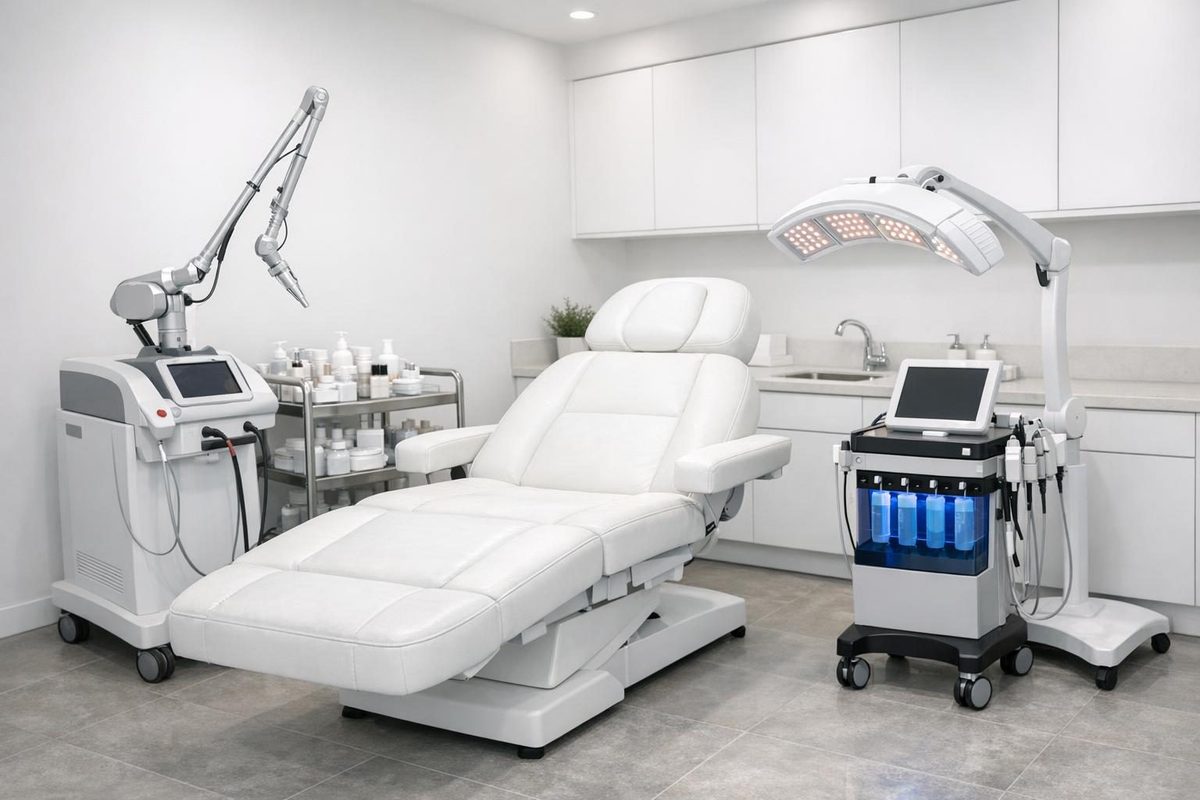
The global medical spa market size is estimated at USD 18.6 billion as of 2024. Research from Grand View Research shows the market is experiencing significant growth, with projections pointing toward $49 billion by 2030. That means the market could grow at a CAGR of roughly 14 to 15 percent throughout the forecast period.
Several key trends are fueling this expansion. Medical tourism brings international clients to U.S. clinics. Higher disposable income makes aesthetic treatments accessible to a wider demographic. And the demand for medical spa services like injectables, laser hair removal, and skin resurfacing keeps climbing year over year.
According to the American Med Spa Association, over 10,000 medical spas now operate in the U.S. alone. The 2024 medical spa state of the industry report confirms that many medical spas are combining cosmetic and wellness services under one roof, creating hybrid setups that function as both a medical center and spa.
Spa Market Growth by Region and Segment
North America dominated the medical spa market in recent years, but Asia-Pacific is catching up fast. The growth of medical tourism in countries like South Korea and Thailand has pushed the global med spa market into new territory. Market research reports indicate that the Asia-Pacific region will lead in growth rate during the forecast period.
In the United States, the med spa market was valued higher per capita than any other region. Urban areas see the densest concentration of clinics. Market segments like body contouring, facial treatments in medical spas, and hair removal continue to drive revenue. The industry report from the American Med Spa Association shows that injectables remain the top revenue generator, followed by laser treatments and skin rejuvenation.
Cost per Click for Med Spa Ads
Google Ads in the medical aesthetics space average roughly $2.50 per click. Simpler services like facials and peels tend to cost less than $2. Specialized treatments, including laser hair removal and injectable fillers, can run $4 to $6 per click. Some competitive keywords push even higher.
Agencies that promise ultra-low CPCs often rely on irrelevant keywords or target regions with minimal search volume. Strong performance is still possible at higher CPCs when targeting aligns with local med spa clients who are actively searching for a provider. Here’s what real keyword data looks like:
| Keyword | Search Volume Monthly | CPC |
| medical spa | 1,600 | $4.85 |
| med spa near me | 1,600 | $9.78 |
| med spa | 1,300 | $5.76 |
| med spa houston | 590 | $5.02 |
| med spa kingwood | 140 | $2.82 |
| best medical spa in houston | 140 | $5.70 |
| medical spa pedicure near me | 110 | $0.00 |
| med spa pedicure near me | 50 | $0.00 |
| medical spa weight loss | 50 | $13.69 |
| med spa in houston tx | 50 | $7.08 |
Conversion Rates for Medical Spa Campaigns
The average conversion rate for med spa website traffic sits between 3 and 5 percent. That number depends on page layout, booking flow, and mobile optimization. High conversion claims deserve scrutiny. If an agency can’t clearly define what counts as a lead, their numbers probably don’t hold up.
Retargeting campaigns often boost conversion rates by around 30 percent compared to cold traffic. These ads reach users who visited your site but didn’t book. They show up on Instagram, Facebook, and display networks. It’s a proven tactic, and top-performing clinics in the competitive med spa industry use it consistently.
Cost per Lead and How SEO Brings It Down
With a standard $2.50 CPC and a 4 percent conversion rate, cost per lead lands around $62. For services like Botox, RF microneedling, and laser resurfacing, expect $50 to $150 per lead. Lower costs sometimes mean unqualified leads or generic traffic.
SEO remains a reliable strategy for reducing long-term lead costs. Once a clinic ranks for relevant keywords, organic leads often drop to $20 to $40 each. Combining local SEO with blogging and dedicated service pages supports steady growth. That’s why we recommend it as a core part of any med spa marketing strategy.
Mobile Traffic and Website Features That Convert
Around 50 percent of users browse medspa sites on mobile devices. Slow pages kill conversions. Sites should load in under three seconds and include clear booking buttons, click-to-call features, and tap-friendly menus.
Here’s what converts on a med spa website:
- Fast load time. Compress images, use caching, and strip unnecessary plugins.
- Booking on every page. Include scheduling widgets and call buttons above the fold.
- Local SEO. Put your city in page titles. Claim your Google Business Profile. Ask happy clients for reviews.
- Service-specific pages. Build dedicated pages for Botox, microneedling, platelet-rich plasma, and every treatment you offer.
- Credibility signals. Staff bios, real clinic photos, and badges for affiliations or medical directors all help.
Medical Spa Ownership and Management Trends
Medical spa ownership has shifted significantly. Many new clinics are opened by nurse practitioners and physician assistants rather than plastic surgery specialists alone. The American Med Spa Association tracks these shifts in their annual state of the industry report, noting that medical spa ownership and management structures now vary widely by state.
Medical directors still play a critical role. They provide oversight for clinical services and help maintain safe, legal operations. But the day-to-day management of spa services, marketing, and client retention often falls to business-side operators. Understanding these industry trends helps clinics position themselves correctly in a competitive market.
The number of medical spas opening each year continues to rise. Market opportunities exist, but so does pressure. Clinics that track data from spa visits, monitor market dynamics, and invest in digital marketing outperform those running on guesswork. If you’re in a related wellness field, the patterns are similar. Check our breakdowns of massage therapist statistics and spray tanning statistics for comparison.
Promises That Deserve a Second Look
If a provider promises:
- First-page rankings within days
- $25 cost-per-lead every time
- 10 percent conversion without retargeting
- Reports based only on impressions
Ask for real benchmarks. These claims are often inflated. The spa market during the forecast period looks promising, but blind trust leads to wasted budget. Real success comes from understanding your market share, tracking the latest trends, and aligning your ad spend with actual performance data.
Why Work with BuyerGain
BuyerGain works with clinics in the medical aesthetics industry. We build campaigns based on data, not guesswork. We conduct market research to understand how people search for your spa services, then write service pages that match those patterns.
Our strategies focus on CPC, CPL, and return on investment. We improve websites with SEO, retargeting, and design upgrades that turn visits into bookings. If you want more med spa clients, better visibility, and campaigns that scale, we’re ready to help. Medical spa statistics confirm the industry continues to grow, and clinics that act on real data will capture the most market share going forward.
FAQ about Medical Spa Statistics
What is the current spa market size in the U.S.?
The U.S. med spa market was valued at over $7 billion in 2024. The spa market size is estimated to keep growing as consumer demand rises for both cosmetic and medical wellness services.
How does the American Med Spa Association help spa owners?
They offer legal guidance, business education, and resources supporting ethical medical spa sector ownership and management. Their annual state of the industry report is one of the most cited sources for market insights.
Are aesthetic treatments standard in med spas?
Yes. Most medical spas include injectables, microneedling, chemical peels, and laser hair removal under the care of licensed medical professionals.
Is the med spa industry still growing?
Absolutely. The industry continues to grow, and the 2024 medical spa state report shows widespread demand for medical spa treatments across urban and suburban regions.
What role do medical directors play in med spas?
Medical directors provide clinical oversight and help maintain safe, legal operations. Their involvement is required by law in most states.
How much is the global medical spa market expected to grow?
The global medical spa market is projected to reach $49 billion by 2030, growing at a CAGR of approximately 14 to 15 percent from its current valuation of USD 18.6 billion.
What does the med spa state of competition look like?
Competition is intense. Many clinics focus on both wellness and high-demand treatments like injectables and skin rejuvenation. Strong branding, digital visibility, and data tracking separate the winners from the rest.
Can small clinics afford medical spa operations today?
Yes, but they need lean strategies. Outsourcing marketing, limiting inventory, and choosing scalable services can help smaller clinics afford operations without sacrificing quality. Standout clinics like Chic La Vie Med Spa show that strong branding matters at any size.